
'My eyes swell up like golf balls': Why rising pollen levels could mean disaster for exam students
A recent study by the University of Manchester has found that cases of hay fever have risen by 33 per cent in the last 20 years.
A different study, published in the Lancet, found that hay fever symptoms are lasting for up to two weeks longer than in the 1990s.
All of which means disaster for hay fever sufferers taking exams this year, especially as GCSEs and A Levels sit in the peak of six different pollens.
Pollen calendar for the East Midlands. CC: University of Worcester.
Pollen calendar for the East Midlands. CC: University of Worcester.
Key: Light Green- earliest to latest pollen, low risk; Dark green- average pollen season duration; Blue- phase when high counts can occur; Purple- phase when very high counts can occur.
Hay fever wreaks havoc on exam takers, causing itchy eyes, sneezing, coughing and in some cases, wheezing.
Symptoms can impact students so negatively that young people with allergic rhinitis (hay fever) are, in comparison with their peers, 40 per cent more likely to drop a grade between their practice exams and final GCSE examinations.
This gets even worse if pupils have to take sedating antihistamines, with the likelihood of them dropping a grade increasing to 70 per cent.
This is a struggle Livvy Taylor-Dykes, 19, knows all too well.
Livvy said: “I suffer from really awful hay fever, my eyes swell up like golf balls.
“[Hay fever] made the whole thing [exams] uncomfortable.
Livvy Taylor-Dykes
Livvy Taylor-Dykes
“I think I would have felt a lot better about doing them had I not been suffering with hay fever.”
"My eyes swell up like golf balls."
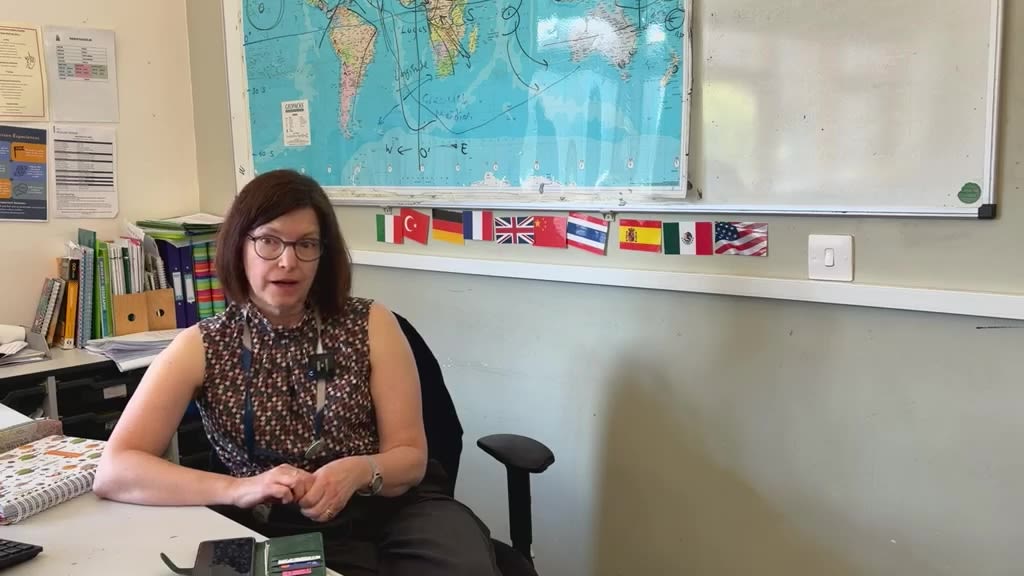
Mrs Emma Timms has taught at Southwell's Minister School for 15 years and thinks that something must be done to help students with hay fever through exam season.
Mrs Timms said: "I think you need to treat people on an individual basis.
"And talk to those students and say what would make life better for you?"
Mrs Timms recalled some of her students struggling through their exams, "coming out of exams, shaking their heads and saying I really struggled in there, I could not really breathe very well."
Livvy believes that relieving some of the pressure on exam days would be of real benefit for hay fever sufferers: “You can have anything happen in exam season which can affect you and then it’s all riding on two exams, it just adds a lot of stress to it, especially if you’ve got hay fever.”
With scientists discovering that climate change has prolonged the pollen season by one or two weeks and exposure increasing for sufferers, symptoms are bound to get worse.
Dr Alexandra Croom, a consultant allergist at Nottingham University Hospitals, said: “I think it is getting worse and we know that pollen seasons have changed, presumably due to climate change over the last few decades.
“The level of pollen released is a stress response.
“If trees are stressed by the climate they try and produce more pollen in order to ensure that there will be more trees in the future.
“So I think more people are experiencing it.”
Dr Alexandra Croom
Dr Alexandra Croom


Dr Croom also pointed to new plants that would not have survived in the UK previously but due to warmer temperatures are now thriving as another reason for worsening hay fever symptoms.
Livvy and her family were so worried about how the condition would impact her GCSEs that they turned to private healthcare and paid for Livvy to have a steroid injection.
However, this only made things worse and didn’t stop Livvy’s symptoms.
Livvy said: “It genuinely made me so ill and it didn’t even work.
“It made me have my period for three or four weeks in a row over exam season.
“So I was going to school feeling really ill and I still had hay fever because it didn’t work.”
The side effects of the injection happened during Livvy’s GCSEs, making the exam period especially difficult.
Livvy said: “It just made the whole ordeal very difficult.
“I’d go into school and my friends would say I was white as a sheet.
“I couldn’t concentrate because I was just so tired, I’d get home and sleep the rest of the day.”
The steroid injection is not recommended by the NHS because of its unpredictable side effects and because its impacts are often limited.
Dr Croom said: “It simply isn’t recommended in national guidelines, but people are offering it.
“It’s a big dose of steroid as an injection that lasts for about two months.
“But it means that you have a steroid that affects the whole body for two months, as opposed to these tiny doses of steroids you’d get in the nasal sprays [an alternative treatment].”
"It simply is not recommened in national guidelines, but people are offering it"
For her A Level exams Livvy steered clear of the steroid injection but said that her hay fever was an added worry she did not need.
Livvy said: “It was stressing me out, in the morning I’d wake up and feel the hay fever symptoms and be like 'oh no!'.
“I’d be stressing about taking my tablet at the right time so I knew it would kick in at the right moment.
“It added a bit more stress to the exam morning.”
For this year's exam takers, pollen levels are expected to be particularly high.
The Met Office has said that warm weather in the UK over the last two years means that conditions have been ideal for birch tree pollen - a major hay fever trigger.
According to the Met Office, this year in particular saw a very warm start to April, making for ideal conditions for pollen release and dispersal, worsening hay fever symptoms.
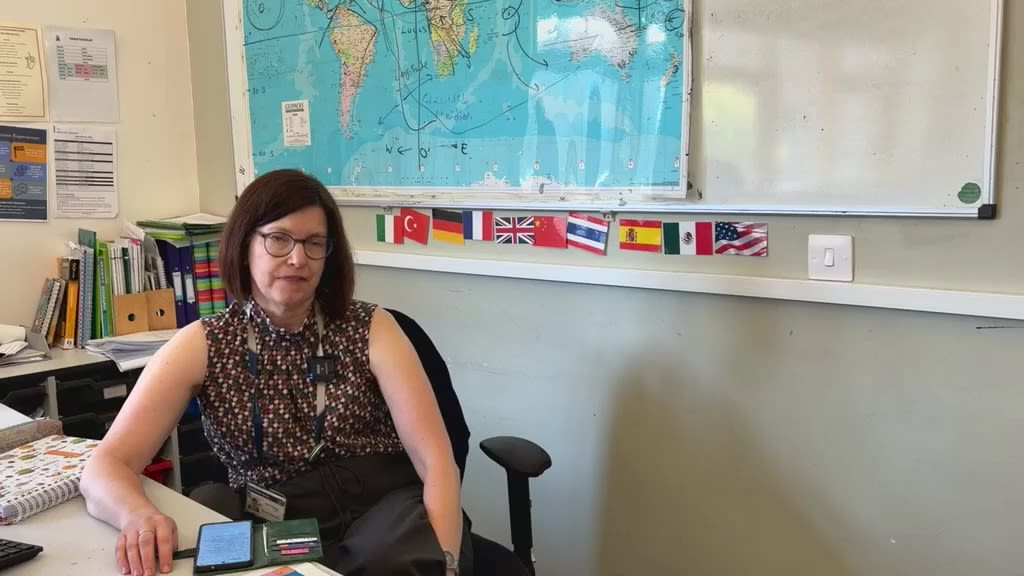
Mrs Timms believes that something must be done to help those students suffering with hay fever.
She said: "I do not think it will be a blanket approach for everybody."
But what can be done about this for future generations?
Dr Croom says: “We know that hay fever can affect exam performance. You can safely assume it also impacts the revision ahead of the actual exam, and so some adjustments are probably justified.”
She suggested balancing exams with coursework spread across the year and starting hay fever drop in clinics.
Dr Alexandra finished with an important reminder to those that are suffering: “It’s important that students with hay fever understand that it is not a trivial condition and can impact their grade if their symptoms are bad, so they need to be prepared.
“It’s not ‘just hay fever’ and dropping a grade can be of real significance at A Level.”
 Built with Shorthand